What Actually Happens During a Chimney Inspection
Booking your first inspection and not sure what you are paying for? Here is a walkthrough of what a technician checks, from the firebox to the crown, and how the levels differ.
 Kirk ChandlerLicensed Public Adjuster & Homeowner Advocate
If you have never scheduled a chimney inspection before, it is reasonable to wonder what you are actually paying for. From the outside it can look like someone shines a light in the fireplace for a few minutes and hands you a bill. There is a lot more to it than that, and understanding what a good inspection covers helps you tell a thorough one from a rushed one. Here is a walkthrough of what a technician actually does on a visit, and how the different inspection levels differ.
The three inspection levels, in plain terms
The industry defines three levels of inspection, and they exist because different situations call for different depth. The level is not about how good the technician is — it is about how much of the chimney needs to be examined and how far the inspector goes to reach it.
- Level 1: the standard annual check for a chimney in regular use with no known problems. The technician examines the readily accessible portions — the parts reachable without tools or dismantling anything.
- Level 2: required when something has changed or is suspected — a home sale, a new appliance or liner, after a chimney fire or an earthquake, or any time a Level 1 turns up a concern. It adds a video camera scan of the entire flue and a look at accessible areas of the attic, crawl space, and basement.
- Level 3: reserved for when a serious hidden hazard is suspected. It may involve removing part of the masonry or a chase cover to reach a concealed area. It is uncommon, and always driven by a specific finding.
For most homeowners, the annual visit is a Level 1. The most common reason for a Level 2 is a real estate transaction — if you are buying a home with a fireplace, insist on a Level 2 with a camera scan, because a Level 1 will not see a cracked liner hiding two stories up.
What a pro looks at, top to bottom
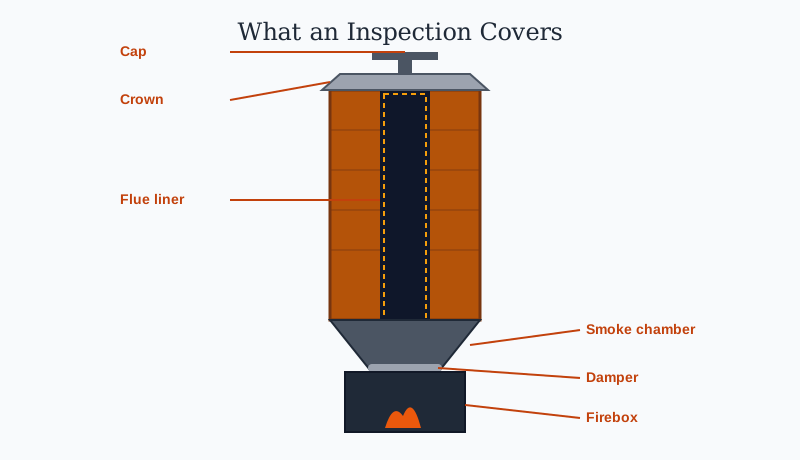
A chimney is a system, and a problem in one part shows up as a symptom somewhere else. A thorough inspection works through the whole thing:
- The firebox and damper — checking the firebox masonry for cracks and confirming the damper opens, closes, and seals
- The smoke chamber and shelf — where loosened debris and creosote collect, and where cracks often hide
- The flue liner — on a Level 2, a camera runs the full height looking for cracked or missing tiles, gaps, and buildup
- The exterior masonry — brick, mortar joints, and any spalling or leaning
- The crown, cap, and flashing — the water-management parts at the top that fail first in our climate
Why the camera changes everything
The single biggest advance in inspection is the video camera. Clay flue tiles crack from the inside, from heat and from settling, and a crack can be perfectly invisible from the fireplace opening while being wide open two stories up. Before cameras, that damage was simply missed until it caused a fire or a leak. Now the inspector can show you the crack on a screen, which also means you are not taking anyone’s word for what needs fixing — you can see it yourself.
That transparency is the part homeowners value most. A good inspection ends with a written report and photos, not just a verbal "looks fine" or "you need work."
Frequently asked questions
- How long does a chimney inspection take?
- A straightforward Level 1 usually takes 30 to 60 minutes. A Level 2 with a full camera scan takes longer, often an hour or more, because the technician is recording the entire flue and checking accessible spaces around the chimney run.
- Which inspection level do I need to buy or sell a house?
- A Level 2. Any change of ownership calls for a Level 2 inspection with a video scan of the flue, because it is the only way to confirm the parts of the chimney a Level 1 cannot see are sound.
Need help with this?
Our team provides chimney inspections across Maryland, DC & Northern Virginia. Get a free estimate today.