How to Prepare Your Chimney for Winter
The best time to deal with chimney problems is before you light the first fire of the season. Here is a simple pre-winter checklist.
 Kirk ChandlerLicensed Public Adjuster & Homeowner Advocate
Fall is the busiest time of year for chimney companies, and for good reason — nobody wants to discover a problem on the first cold night of the season, when the calendar is full and a fireplace suddenly is not safe to use. A little preparation now, before you actually need the heat, means a safe and warm season ahead with no unwelcome surprises.
Your pre-season checklist
Run through these items before you light the first fire of the year:
- Schedule an inspection early, before the fall rush fills the calendar
- Have the flue swept if there is any creosote buildup — do not wait until it is thick
- Check that the cap is in place and undamaged, so rain, debris, and animals stay out
- Look for water stains, white staining, or crumbling mortar that point to a leak
- Test that the damper opens, closes, and seals properly
- Confirm your smoke and carbon monoxide detectors work and have fresh batteries
- Stock up on dry, seasoned firewood and store it off the ground — wet wood creates far more creosote
Start with the inspection
The single most important item on the list is the annual inspection, because it is what tells you which of the others actually need attention. A technician checks the flue for buildup, examines the liner and masonry for cracks and water damage, and confirms the whole system is sound and clear before you rely on it all winter.
Do not overlook water and moisture
Summer storms and the freeze-thaw cycle of the previous winter are hard on masonry. Water that got in through a failed cap or cracked crown can freeze, expand, and widen those cracks once temperatures drop. Catching a moisture problem in the fall gives you time to waterproof or repair it before winter makes it worse.
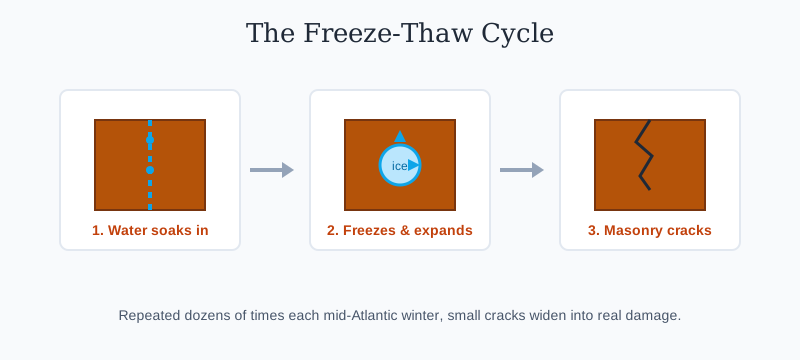
This matters more here than in a lot of the country. Maryland, DC, and Northern Virginia sit in a climate that repeatedly crosses the freezing line all winter — a wet 40-degree afternoon followed by a hard overnight freeze, over and over. That constant cycling is exactly what drives water damage in local chimneys, and it is why the fall moisture check is not something to skip.
Why timing matters
Booking in late summer or early fall gets you an appointment before demand peaks in October and November. Just as importantly, it leaves a cushion of time to complete any repairs the inspection turns up — a new cap, a liner repair, some masonry work — before you actually need the fireplace. Wait until the first freeze and you may be stuck on a waiting list with a fireplace you cannot safely use.
Frequently asked questions
- When is the best time to get my chimney ready for winter?
- Late summer or early fall is ideal. Booking before the October–November rush means a shorter wait and leaves time to complete any repairs the inspection reveals before you need the fireplace.
- Do I need both an inspection and a cleaning every fall?
- An inspection every year, yes. A cleaning only if there is measurable creosote buildup. The inspection is what determines whether a sweep is actually needed, so it is always the right place to start.
Need help with this?
Our team provides chimney inspections across Maryland, DC & Northern Virginia. Get a free estimate today.