Why Mid-Atlantic Winters Are So Hard on Masonry Chimneys
Our winters are not the coldest, but the constant freeze-thaw swing is uniquely tough on masonry. Here is why local chimneys crack and spall, and how to get ahead of it.
 Kirk ChandlerLicensed Public Adjuster & Homeowner Advocate
People are sometimes surprised that chimney damage is such a problem here. We are not northern Minnesota; our winters are relatively mild. But mild is exactly the issue. The specific thing that destroys masonry is not deep cold — it is water freezing and thawing over and over, and the mid-Atlantic climate of Maryland, DC, and Northern Virginia serves that up better than almost anywhere. A hard, steadily frozen winter is in some ways easier on a chimney than our sloppy, back-and-forth one.
What freeze-thaw actually does
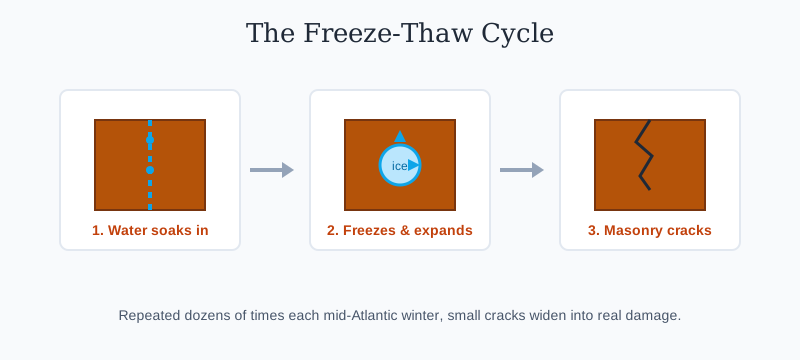
Brick and mortar are porous — they absorb water. When that trapped water freezes, it expands by roughly nine percent, and it pushes outward on the masonry from the inside with real force. When it thaws, the masonry relaxes, and more water seeps into the slightly widened space. Freeze it again and the crack grows. Repeat that dozens of times over a single winter and small flaws become real damage.
Why our climate is the worst case
The damage is driven by the number of times the temperature crosses freezing, not by how cold it gets. A place that drops below freezing in December and stays there until March goes through the destructive cycle only a couple of times. Our region does it constantly — a 45-degree rainy afternoon that soaks the brick, followed by a 25-degree night that freezes it, followed by a thaw the next day. That pattern can repeat many dozens of times each winter, and every cycle is another small pry against the masonry.
What the damage looks like
This is the wear seen more than any other on local chimneys:
- Spalling — the brick face flaking, popping, or crumbling off as trapped water expands behind it
- Cracked or crumbling mortar joints, which then let in even more water
- A cracked crown at the top, one of the most common freeze-thaw casualties
- White, chalky staining (efflorescence) that signals water is moving through the masonry
- In bad cases, a chimney that begins to lean as joints fail unevenly
How to get ahead of it
The whole battle is about keeping water out of the masonry before winter can freeze it. That means a sound crown and cap shedding water at the top, solid mortar joints, and — very effectively in our climate — a breathable waterproofing sealant that stops the brick from absorbing water while still letting the chimney dry out. The key is timing: this is fall work. Once the freeze-thaw cycling starts, any water already in the brick is going to do its damage, so the time to seal and repair is before the first hard freeze.
Frequently asked questions
- Why does my brick chimney crumble if our winters are mild?
- Because the damage comes from water freezing and thawing repeatedly, not from extreme cold. Our mid-Atlantic winters cross the freezing line constantly, so water trapped in the brick expands and contracts many times each season, which is exactly what breaks masonry down.
- Does waterproofing really help, or does it trap moisture?
- A proper chimney waterproofing product is vapor-permeable, or breathable. It stops liquid water from soaking into the brick while still letting moisture already inside escape as vapor, so it protects against freeze-thaw without sealing water in. Ordinary non-breathable sealers are the ones that can trap moisture.
Need help with this?
Our team provides chimney & masonry repair across Maryland, DC & Northern Virginia. Get a free estimate today.